

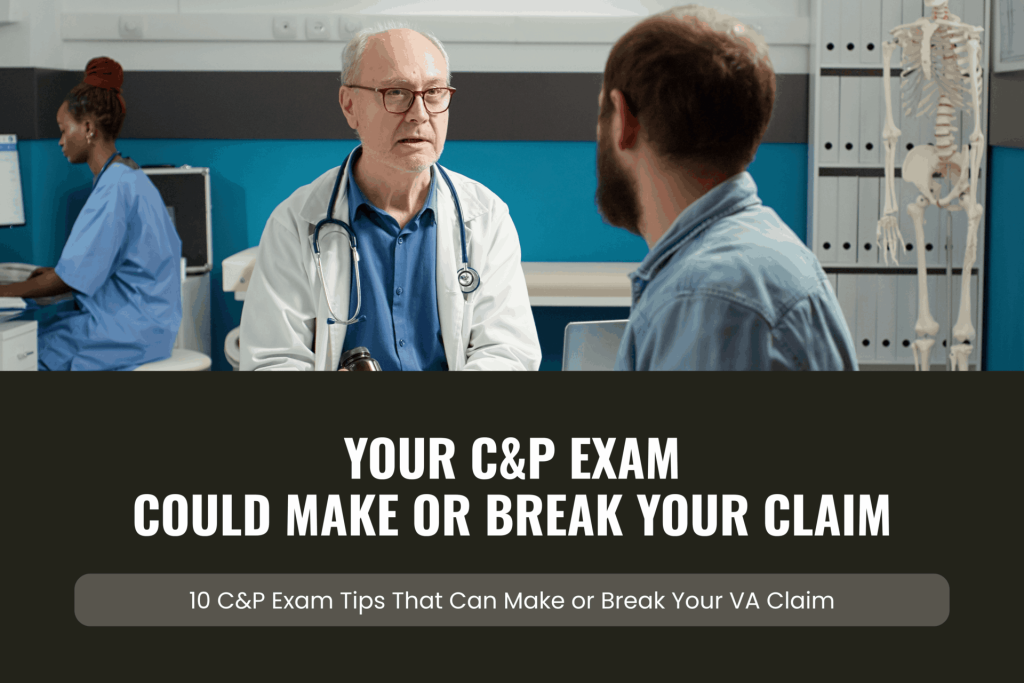
Thirty minutes can shape a rating that lasts for years. Here’s how to walk in prepared.
For a lot of veterans, the Compensation & Pension exam is the single most nerve-wracking part of the entire claims process.
You’ve pulled your records together. You’ve filed. You’ve waited months for a phone call or a letter. And now you’re sitting across from a stranger, hoping they somehow understand what you actually live with every day — in the span of maybe thirty minutes.
We hear the same two things constantly at Vital Veterans Consultants:
“I left my exam and realized I never even mentioned half of what I deal with.” — “The examiner only spent fifteen minutes with me.”
Here’s the truth underneath both of those statements: your C&P exam is one of the most influential pieces of evidence in your entire claim. That examiner’s report can shape whether service connection gets established, how severe your condition is considered, and ultimately, the number the VA lands on.
The good news is that preparation genuinely changes outcomes. Here are ten things worth knowing before you walk in.
- Actually Know Your Own Medical History. Before the exam, take a real pass through your service treatment records, VA records, private medical records, current diagnoses, medications, and treatment history. You don’t need to have it memorized — you need to be able to explain, without fumbling, when your symptoms started, how they’ve changed over time, and what they actually do to your day-to-day life.
- Understand What’s Actually Being Evaluated. A lot of veterans assume the exam is just there to confirm a diagnosis. It’s doing far more than that — the examiner is documenting current symptoms, severity, functional limitations, medical history, and how the condition affects your work and daily life. The VA isn’t just asking whether you have the condition; it’s asking how much that condition has taken from you. That second question is where your rating gets decided.
- Don’t Describe Only Your Good Days.This is the mistake we see more than any other. Veterans downplay almost instinctively — “I’m doing alright,” “I’ve learned to deal with it,” “It’s manageable.” Every one of those might be honest, and none of them tells the examiner what your worst days actually look like. Talk about the hard days, specifically and truthfully. Don’t exaggerate. Don’t minimize either.
- Trade Vague Statements for Real Examples. “My back hurts” doesn’t tell an examiner much of anything. Can you stand for more than a few minutes at a time? Carry groceries in from the car? Get down on the floor to play with your kids? Sleep through the night? Hold down a full work week without missing days? Specific, concrete examples do the communicating that a general statement never will.
- Be Honest — In Both Directions. Some veterans worry about saying too much. Others worry they won’t say enough. The answer is the same either way: tell the truth. Don’t invent symptoms, and don’t inflate them. But don’t quietly leave out details either, just because you’ve gotten so used to living with them that they don’t register as remarkable anymore.
- Functional Impact Is the Whole Point. The VA isn’t only interested in a diagnosis on paper. It’s evaluating how that condition plays out across your actual life — work, family, relationships, mobility, sleep, memory, concentration, the ordinary tasks of daily living. Veterans forget to mention this constantly, mostly because they’ve adapted to it over years. It’s usually exactly the detail that matters most.
- Bring What You Actually Need. You don’t need to show up with a binder of every record you’ve ever generated. But it helps to have your current medication list, some notes on your symptoms, and any relevant private medical records that might not already be in your file. Being organized means you can answer questions accurately instead of guessing under pressure.
- Stay Calm — This Is an Evaluation, Not a Fight. Nerves are completely normal walking in. It helps to remember this is an evaluation, not an argument you need to win. Answer honestly. Ask for clarification if something’s unclear. If you’re not sure of an exact date, say so — guessing incorrectly is worse than admitting you don’t remember.
- Don’t Assume the Examiner Already Knows Your Story. Some examiners come in having reviewed your file closely. Others are working mostly off what you tell them in the room. Don’t assume they already understand what you’ve been through. If something matters to understanding your condition, make sure it gets said — respectfully, clearly, and without waiting to be asked the exact right question first.
- The Exam Is One Piece, Not the Whole Claim. One of the most common misconceptions we run into: veterans think the C&P exam single-handedly decides the outcome. It doesn’t. It’s one significant piece among several — medical records, personal statements, buddy letters, treatment history, and other supporting documentation all feed into the final decision. That’s exactly why the preparation before the exam matters just as much as the exam itself.
What We’ve Actually Seen
We’ve talked to veterans who walked in feeling fully ready, only to leave realizing they never explained the exact symptoms hitting them hardest. We’ve also worked with veterans who had strong medical records on paper but had never clearly connected those records to what their condition actually costs them at work, at home, or at night.
Every claim is different, and no outcome is ever guaranteed. But the pattern holds up again and again: the strongest claims come from organized evidence paired with a clear, honest account of how a condition actually plays out in daily life.
How Vital Veterans Consultants Helps
Preparing for a C&P exam was never about memorizing the “right” answers. It’s about actually understanding your own claim. Our team helps veterans:
✓ Review their medical evidence
✓ Identify where the documentation has gaps
✓ Organize supporting records
✓ Understand how the VA claims process actually works
✓ Prepare to explain, clearly and accurately, how their conditions affect daily life
We’re not here to tell veterans what to say. We’re here to help them tell their own story completely, honestly, and with confidence.
Don’t Leave Benefits on the Table
Your C&P exam might last less than an hour. The outcome can shape your VA benefits for years afterward.
If you’re getting ready to file a claim, appeal a decision, or push for an increased rating, taking the time to prepare beforehand can make a real difference.
