

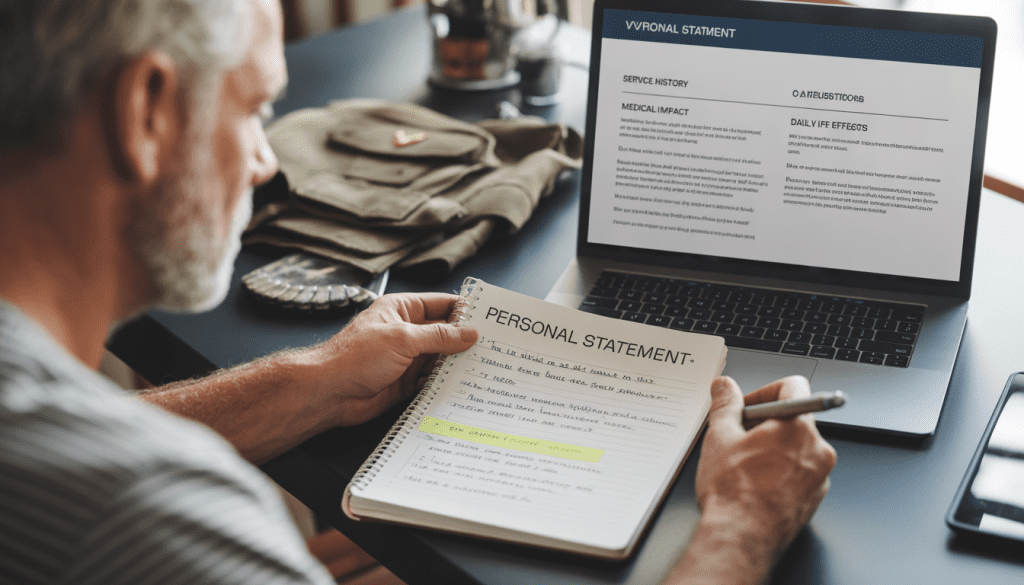
When veterans apply for disability benefits through the U.S. Department of Veterans Affairs, much of the process focuses on documentation. Medical records, service records, and examination results all play important roles in determining eligibility.
Yet there is another piece of evidence that can make a meaningful difference in how a claim is understood. A personal statement allows veterans to explain their experiences in their own words. It helps connect medical facts with real life impact and provides context that official documents may not fully capture.
A well written personal statement can help decision makers see the complete picture. It explains how a condition began, how it affects daily life, and why the claim matters.
Understanding how to write a strong personal statement can make the VA disability claim process clearer and more effective.
What Is a Personal Statement in a VA Disability Claim?
A personal statement is a written explanation submitted by the veteran as part of their disability claim. It is often included using a VA form or as a separate written document.
The purpose of the statement is to describe the veteran’s experience with the condition being claimed. It provides insight that may not appear in medical records alone.
While official records confirm diagnoses and treatments, a personal statement can explain:
- When symptoms first appeared
- How the condition developed over time
- The impact on work, relationships, and daily activities
- The connection between military service and the current condition
According to the U.S. Department of Veterans Affairs, personal statements can serve as supporting evidence when evaluating disability claims. They help clarify circumstances that may not be fully documented elsewhere.
Why Personal Statements Matter in VA Claims
Many veterans assume that medical records alone will tell the entire story. While medical documentation is essential, it may not always show how symptoms began or how they affect everyday life.
A personal statement fills these gaps.
It allows veterans to describe their experiences in a way that makes the evidence more understandable. When written clearly and honestly, it helps VA reviewers connect medical findings with real world challenges.
A strong personal statement can:
- Provide context for medical records
- Explain events that were not documented during service
- Clarify the timeline of symptoms
- Show how the condition affects daily functioning
This information can strengthen the overall claim and help decision makers better understand the situation.
When Personal Statements Become Especially Important
Personal statements are helpful in many claims, but they can be particularly valuable in situations where documentation is limited.
Conditions That Developed Gradually
Some medical conditions do not appear immediately after service. Instead, symptoms may develop slowly over time.
In these cases, a veteran’s explanation can help show how symptoms began and how they progressed. This context can help establish the connection between service and the current condition.
Injuries That Were Not Fully Documented
During active duty, some injuries or health concerns may not have been formally reported. Veterans may have continued working despite pain or illness.
A personal statement can explain the circumstances surrounding the injury and describe what happened at the time.
Mental Health Conditions
Conditions such as anxiety, depression, or trauma-related disorders may be difficult to describe through medical records alone.
Personal statements allow veterans to explain emotional and psychological experiences in their own words. This can help reviewers understand the full impact of the condition.
Claims Involving Appeals
When veterans seek VA claim appeal help, personal statements can clarify why they believe a previous decision did not fully consider their situation.
Providing additional context during an appeal can strengthen the case and highlight missing details from the original claim.
Key Elements of a Strong Personal Statement
Writing an effective personal statement does not require complicated language. The goal is simply to communicate clearly and honestly.
The following elements often make a statement stronger and easier for reviewers to understand.
A Clear Timeline
Start by explaining when the condition first appeared and how it relates to military service.
If possible, include:
- The approximate date symptoms began
- Where were you stationed at the time
- Any events or exposures that may have contributed to the condition
Providing a timeline helps reviewers follow the sequence of events.
Specific Examples
General statements are less helpful than specific descriptions.
Instead of simply saying a condition affects daily life, explain how it does so. For example:
- Difficulty standing or walking for long periods
- Trouble concentrating at work
- Frequent medical appointments or treatments
- Sleep disruptions or chronic pain
Concrete examples make the impact of the condition easier to understand.
Honest and Accurate Details
Accuracy is essential in any claim. Personal statements should reflect the veteran’s genuine experience without exaggeration or speculation.
Consistency between personal statements, medical records, and other evidence helps build credibility.
The Impact on Daily Life
One of the most important parts of a personal statement is describing how the condition affects everyday activities.
This may include challenges related to:
- Employment or job performance
- Household tasks
- Physical mobility
- Social relationships
- Mental or emotional well being
Explaining these impacts helps demonstrate why the condition deserves consideration as a service related disability.
How Supporting Statements Can Strengthen a Claim
In addition to the veteran’s own statement, supporting statements from others can provide valuable perspective.
These are sometimes called lay statements or buddy statements.
They may come from:
- Family members
- Friends
- Fellow service members
- Coworkers
These individuals can describe what they have observed about the veteran’s condition and how it has changed over time.
For example, a spouse might explain how a condition affects daily routines, while a former service member may confirm events that occurred during deployment.
Together, these statements can reinforce the veteran’s personal account and strengthen the overall claim.
Organizing Your Personal Statement Effectively
A clear structure makes personal statements easier to review. While there is no required format, organizing the information logically can help.
Many veterans find it useful to include the following sections:
- Introduction
Briefly identify yourself and the condition being claimed. - Service Background
Describe the time period and location where the relevant events occurred. - Development of Symptoms
Explain when symptoms started and how they progressed. - Current Impact
Describe how the condition affects daily life today. - Closing Statement
Summarize why the condition is connected to military service.
Keeping the statement focused and well organized helps reviewers understand the key points quickly.
Veterans who feel uncertain about how to structure this information may seek help filing a va claim to ensure their documentation is clear and complete.
Avoiding Common Mistakes
While personal statements can strengthen a claim, certain mistakes may reduce their effectiveness.
Common issues include:
- Writing statements that are too vague
- Leaving out important timelines
- Including information that conflicts with medical records
- Using overly emotional language instead of clear explanations
The goal is not to write a dramatic story but to present a clear and truthful account of the condition and its effects.
Veterans who want additional guidance often work with professionals who offer va disability consulting to help review documentation before submission.
The Human Side of a VA Disability Claim
The disability claims process involves many forms, documents, and evaluations. While these elements are essential, they cannot always capture the personal experiences behind each claim.
A personal statement allows veterans to share their perspective directly. It helps decision makers understand not only what happened, but how those events continue to affect daily life.
When combined with strong medical evidence and service documentation, a thoughtful personal statement can help present a complete and accurate picture of the claim.
Veterans who are preparing a disability claim or seeking guidance with supporting documentation can benefit from experienced assistance. To learn more about available resources and professional support, visit https://vitalveteransconsultants.com/ and explore how knowledgeable guidance can help you move forward with confidence.
